
Awareness works. I remember watching Sir John Kirwan’s infomercials about depression and it was the catalyst for me to get professional help.
But awareness can only go so far in a work setting. You hear a lived experience story. You might resonate with it. It might feel cathartic even. But if the systems and structures around the people struggling at work don’t change, the same challenges could crop up – masking, absenteeism, lack of psychological safety, a fear of raising mistakes or concerns. Employees leaving their best ideas and best selves hidden or diminished.
I know this from personal experience.
I don’t want to bag awareness weeks. In the workplace and in homes up and down the country it does real work. It gives us language. It gives us a reference point. It makes a subject sayable and chips away at stigma and discrimination. It deserves huge kudos for that. A large part of my work is awareness and empathy building – it’s the perfect starting point.
The theme for this year’s Mental Health Awareness Week is Belonging Matters. It’s got me thinking about what it means to really belong at work. To me it boils down to a sense of agency and contribution and the safety to be yourself.
With this year’s theme in mind, it’s worth asking what belonging requires of a workplace culture, rather than what it requires of the people in it.
Six people (including me) who built work around their rhythms and health
Over the past few months I’ve been interviewing entrepreneurs and business owners on my new podcast, Business in the Bath.
On the podcast, I’ve so far featured the following guests:
Tiffany Bartlett, email marketing expert, introvert, and she sometimes struggles with anxiety. She stopped trying to run her business the way extroverted business owners run theirs, and built it instead around time-blocking and techniques to protect her energy.
Deb Thompson who left full-time teaching because of fibromyalgia. She now coaches others through the same condition and talks about recovery mindset and flexible persistence.
Tracy Tufnell left a decade-long corporate career after a concussion forced her to slow down, around the same time perimenopause arrived. She structures her days around rest, morning walks, meditation and breathwork, and credits the injury with teaching her to put herself first.
Catherine Watson has been working for herself for just shy of 20 years. With a focus on accessible design, she runs a graphic and website design business, and for a decent stretch she measured herself against other designers on Instagram. That’s until she deleted the app and defined what success looked like for her instead.
Wendy Brown started her digital marketing business after Covid and a change in work circumstances led her to rethink what she wanted from life. Her recent ADHD diagnosis means her self-talk is a lot more compassionate.
And then there’s me, running a business while living with bipolar.
Six different realities and the same outcome: work gets better once it fits the person
All six of us are self-employed. We all have the luxury (or arguably the necessity) of controlling our own work conditions, rhythms and structures. And finding work that aligns with our values.
But it is possible to translate these insights into workplaces too. It takes some planning, curiosity and mindset shifts, but it’s worth it.
Structures can unravel otherwise healthy self-care initiatives
In my most recent episode, I interviewed Bex Silver, a social worker and Multi Systemic Therapist (MST). While she is not an entrepreneur in the strictest sense, I have been following her work on Instagram and invited her on the podcast, as I was curious about MST and her professional insights on systems and structures.
She describes MST like this:
“Therapy often asks, what’s wrong with you? Multi Systemic Therapy asks, what’s going on with the systems and the structures and the context around this person?”
Then she said the thing that reframed the whole conversation for me.
“No amount of emotional regulation is going to fix a sick environment or is going to change some structures that are inherently oppressive and making it hard for you to be well.”
Bex’s work takes her into settings where the systems around a person have shaped whether they got well or got worse. Her view is that the environment does a great deal of the work, and that we routinely credit or blame the individual for an outcome the conditions around them largely decided.
She’s also practical about what better conditions look like. She talks about micro-communities which anyone can initiate.
“I’ve recently started a gardening group with some friends where each weekend we go to one person’s home and help them garden.” Or, as she answered elsewhere in the episode: being able to call someone when you’re unwell and ask whether you can drop your kid over for a couple of hours so you can sleep.
Bex asks a different set of questions about success, too. How connected am I to my community? How can I use my skills and resources to support other people? Do I have meaningful relationships? Am I looking after my wellbeing? Is this sustainable?
Look back at the six stories above and you’ll see every one of them arrived at some version of those questions.
What honesty costs when workplace conditions haven’t changed
In September, a Facebook writer stuck with me: Ian Callaghan.
(Sweary and talk of suicide – read at your own discretion!)
He wrote something during suicide awareness month that felt really profound (and backs up this entire blog):
“We love talking about people speaking up, but we are far less enthusiastic about creating environments where speaking honestly does not carry a penalty. Tell the wrong employer you are struggling and suddenly every conversation feels like an assessment.”
An awareness week invites disclosure. A workplace that hasn’t changed its conditions penalises people for accepting the invitation. Then, as Ian put it, everybody wonders why people keep things to themselves.
What a team can change once Mental Health Awareness Week is over
Concrete places to start:
- Audit who carries the burden. When someone discloses at your organisation, what happens over the following month? Who does the extra work: them or you?
- Make adjustments available without disclosure. Flexible hours, quieter spaces, clear meeting agendas and minutes, understanding and using different communication styles, and recorded sessions help a lot of people. None of them should require a diagnosis.
- Write down what happens next. If a manager hears something difficult, they need a documented path rather than their own best guess.
- Build one micro-support into the team’s week. Something practical that people do for each other, in Bex’s sense.
- Review progress and impact after 6-8 weeks, 3-4 months and six months. The good news is I have a built-in review system with my workplace training (read more below) so you don’t have to add another item to your mental load.
Read more about solidarity and community care
I know the value of self-care and collective care and how changing work conditions (and not necessarily dramatically) can make a huge difference.
If you live with bipolar, or you love, lead and look after someone with bipolar, I’ve written a free download called 8 things I’d Like You to Know About Bipolar. It’s a short piece of my pocketbook and you can get your copy here:
Get your freebie
Lunch and learns – available year-round

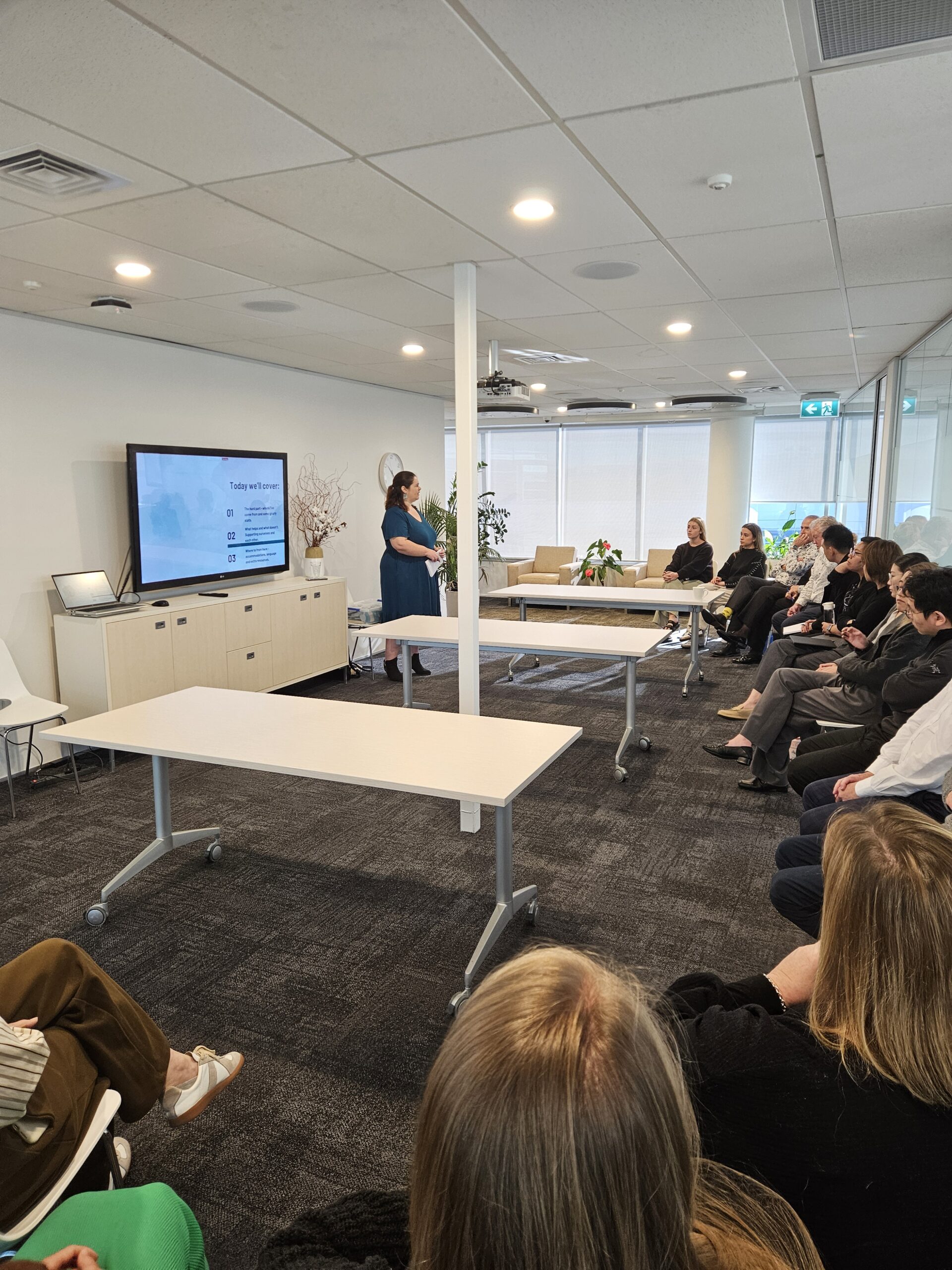
I’ve spent the last few years talking to organisations about my own experience of living and working with bipolar.
After one of those sessions, Nicola (who used to be CEO of Drowning Prevention Auckland and now Arthritis NZ) wrote that my story landed deeply and had her thinking a lot about inclusion, and how to create safe spaces whether people are disclosing health needs or not.
A researcher, who used to be a paramedic, told me afterwards that hearing the personal story rather than the medical ifs and whys was humbling and insightful.
If you’d like me to bring this conversation to your team and give you actionable insights to support authentic belonging, I’d love to chat. For more information and to register your interest, please visit my website.